

Covering AI Without Looking Away From Its Environmental Cost

Artificial intelligence is no longer a future newsroom technology—it’s already here.
Across media organizations, journalists are increasingly using AI tools to support research, transcription, brainstorming, editing, and workflow management. While these technologies offer new opportunities for efficiency and productivity, they also raise important questions that journalists cannot afford to ignore.
For climate and environmental reporters, the conversation is particularly complex.
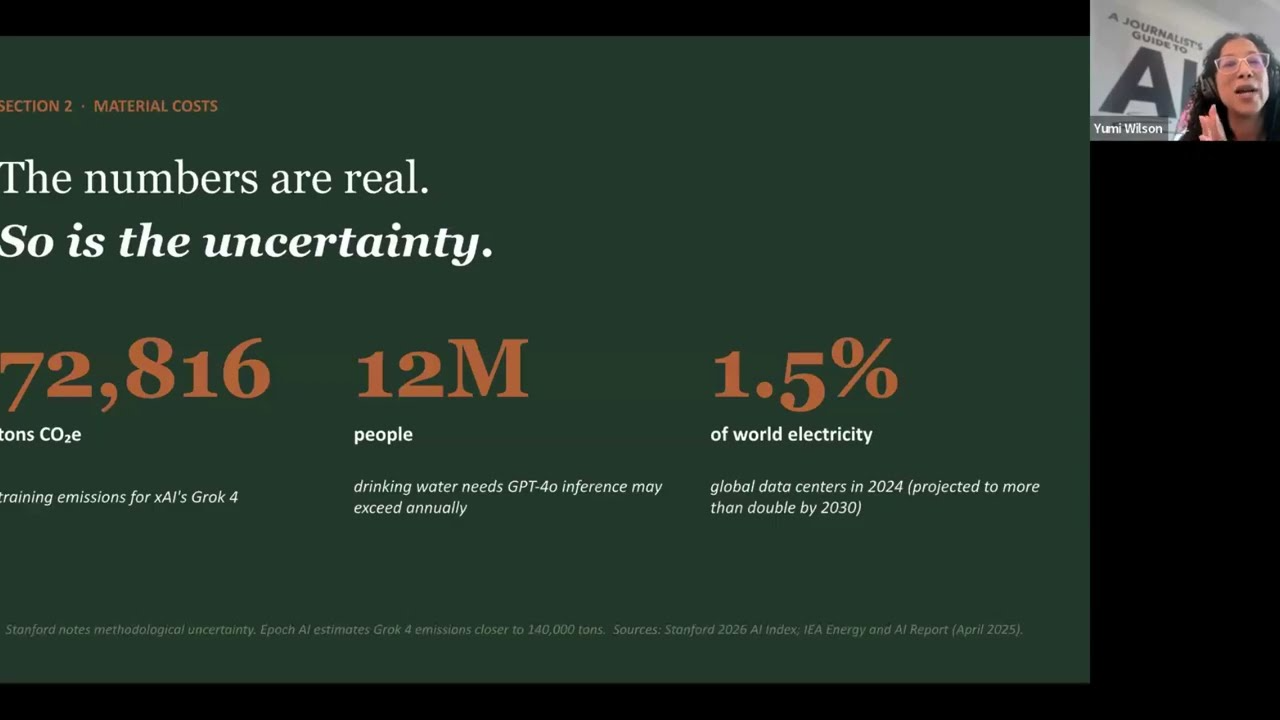
The same generative AI systems transforming newsroom workflows depend on energy-intensive data centers whose growing electricity and water consumption have become significant environmental concerns. As AI adoption accelerates, journalists are being asked to cover a technology that they may also be using themselves.
AI Is Both a Tool and a Story
In a recent session hosted by the Metcalf Institute and the Solutions Journalism Network, veteran journalist and San Francisco State University Professor Yumi Wilson examined how journalists can engage with AI responsibly while maintaining professional standards and public accountability.
Rather than focusing on hype or fear, the discussion centered on practical questions:
- How are newsrooms currently integrating AI into their workflows?
- What are the risks of AI-generated misinformation and inaccuracies?
- What environmental costs should journalists understand and investigate?
- How can reporters maintain editorial oversight when using AI tools?
- What frameworks support responsible AI adoption in journalism?
Keeping Journalists in the Loop
One of the most important takeaways from the conversation is that AI should never replace journalistic judgment.
While AI can assist with certain tasks, it cannot independently verify facts, provide context, make ethical decisions, or replace the critical thinking required for quality reporting.
Journalists remain responsible for every story they publish. That responsibility does not disappear when AI enters the workflow.
Reporting on AI’s Environmental Footprint
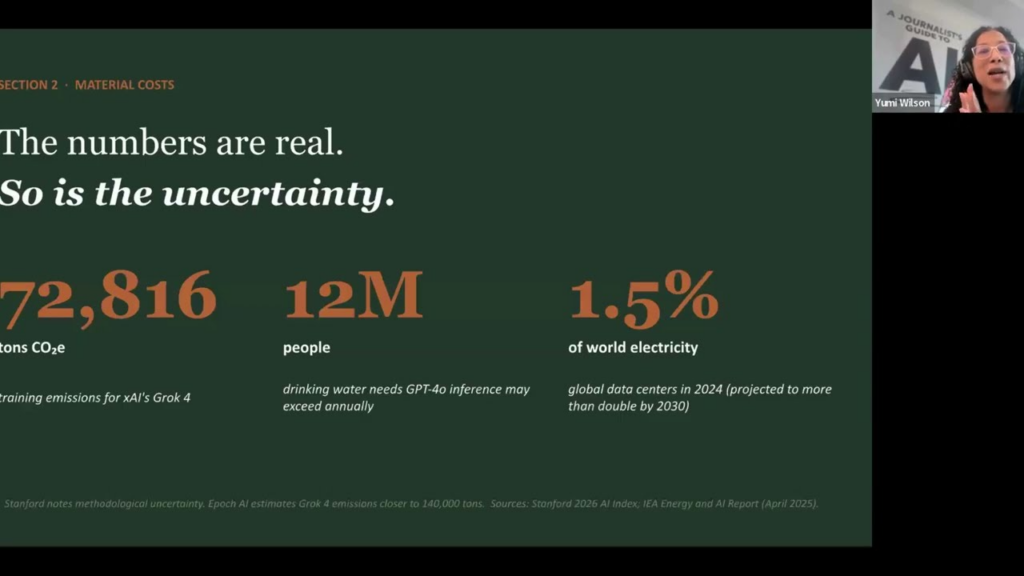
As AI infrastructure expands globally, environmental impacts are becoming part of the story.
Data centers require substantial energy resources and large volumes of water for cooling. These demands raise important questions about sustainability, resource management, and the broader environmental implications of emerging technologies.
For reporters covering climate, science, public policy, and environmental justice, understanding these impacts is increasingly essential.
A Balanced Approach
The challenge facing journalists today is not deciding whether AI should exist in the newsroom. The technology is already here.
The real question is how to use it responsibly while continuing to ask hard questions about its societal and environmental consequences.
As Yumi Wilson emphasized, AI should be viewed as infrastructure rather than a shortcut—something that requires oversight, verification, and intentional use.
For journalists committed to accuracy and accountability, that means embracing both sides of the story: AI’s potential benefits and the costs that come with them.

Leave a Reply